
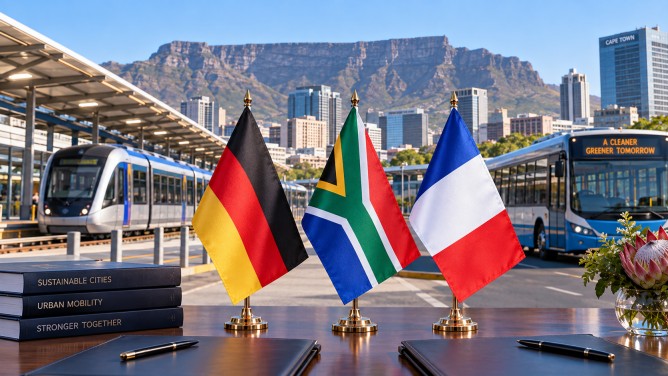
In a concerted effort to enhance essential municipal services in South Africa, Germany and France have pledged a total of €300 million, which equates to approximately R5.6 billion, in concessional financing. This financial support is aimed at improving electricity, water, sanitation, and waste management services in the country’s eight metropolitan municipalities. The Metro Trading Services Reform programme, which will be funded through this initiative, seeks to bolster the financial and operational performance of these critical services, ensuring that the revenue generated is reinvested back into infrastructure development.
The metropolitan areas in question serve a combined population of over 22 million people. The reforms are designed to tackle service interruptions, address infrastructure deficits, and enhance the financial stability of these major urban centers for the long run. Of the total financial commitment, Germany will provide €200 million, while France will contribute €100 million. Both countries view this funding as a component of their broader commitment to South Africa’s Just Energy Transition programme.
According to the South African government, upgrading municipal services plays a vital role in supporting the country’s energy transition. It is hoped that these improvements will also attract further public and private investments, particularly in the modernization of electricity distribution networks. However, the scope of the infrastructure challenges indicates that additional financing will be necessary beyond this initial commitment. Germany has previously extended concessional loans to cities like Johannesburg and Cape Town for improvements to their electricity grids and the integration of renewable energy sources.
France has also been active in backing infrastructure and climate resilience projects in several South African municipalities. The reform initiative forms part of a larger strategy to enhance municipal governance, improve financial management, and ensure that essential services can generate enough revenue for maintaining and expanding infrastructure. For the millions of residents served by these municipalities, the true test of the initiative’s success will be whether the investment results in more reliable electricity, water, sanitation, and waste services, while enabling cities to develop financially sustainable systems for future infrastructure growth.